

Folk festivals and traditions in Belitsa
Festivals in Belitsa, linked to the Orthodox Christian calendar reveal ancient traditions and rituals, which are on the verge of disappearing in our modern times. They bear the stamp of an ancient culture, which has survived the course of time and the vicissitudes of history
Surva – January 1
On the day named Surva, the lads would make a tour of the village or town houses to wish health to their inhabitants by patting them on the back with decorated twigs of the cornel tree. The hosts, on their hand, would distribute gifts of dried fruit, nuts, popcorns and small round ritual breads with a hollow in the middle.
St. Atanas’s Day – January 18
On the day before, the girls aged 13-15, and in earlier times – the girls of a marital age, prepared nosegays with geranium. They collected also feathers from the hens and dyed them in different colours. The young maidens would make feathers both for themselves and for the younger girls. The boys were supposed to steal the nosegays and the feathers at the swings. On St. Atanas’s Day, the girls dressed in their finery and put a feather in their hair on sew it on their dress, always on the left-hand side. In earlier times the feathers were made from boar’s bristles and gold leaf or shiny tin-foil. Three or four feathers were arranged in a ring, made of gold leaf or tin-foil, and fixed on the underside by wax.
On St. Atanas’s Day swings were built, to perform the ritual of swinging the maidens. Each quarter would build swings of their own. Swinging took place in the afternoon, till nightfall. Earlier, when the girls did not visit school, swinging started in the morning. The mothers would give their daughters a rope and a piece of rug or cloth (the same one, which was used for carrying around the babies), to use them on the swings. The swings were attached to trees, under the gates, in the barns or on the beams of the old houses. It was either the fathers, or the girls themselves, who did that.
When the girls started swinging, the boys would come round to swing them very high. While swinging, the girls would have a sort of a singing contest, predicting who was going to marry whom.
“A blue flower was blooming,
everybody passed and picked some,
Kircho picked one and gave it to Radka.”
“White snowdrops are in the bloom by Nadya’s windows.
Who picked them to carry away our girl?”
Then a lad would steal the feather, which belonged to the girl he fancied. There was much laughter, jokes and fun on that day. A ritual for health – as it is believed today. As the girls were swinging, one would suddenly let go of the rope that moved the swing and it would start going around in circles. If the rope made lots of circles, the prediction was: lots of gold coins, she’d marry a rich person. If the rings were but a few – it would be a poor marriage.
St. Todor’s Day – a movable feast, the first Saturday of the Pentecost fasting
There were many horses and donkeys in Belitsa. On Todor’s Day the young unmarried lads would mount the horses and go to the locality, where the festival of the Holy Mother was held, near the station. They would take some food with them (lean meals), have a bite and race each other.
Chetiristo – St. 40 Martyrs – March 22
On this day women did not comb their hair, nor weave, so as not to have the snake follow them – it was believed that each house had a guardian snake. On Chetiristo, the snakes went out, as it was getting warmer and in autumn they came back home again.
St. Lazarus Day – a movable feast, a week before Easter, the Saturday before Palm Sunday.
On St. Lazarus Day the maidens would visit people’s homes to sing and dance. The s. c. “lazaruvane” ritual, which is a major custom in almost all others parts of Bulgaria, is not typical of the Belitsa region. Similar functions were performed on other local festivals, especially on St. Atanas’s and St. George’s days.
Easter
On the first day of Easter a large chain dance (“horo”) took place on the central square, to the music of bagpipes, clarinets and drums. From time to time women would start singing. When the horo was played to the music of singing, one group of women would sing at one end of the dance chain, and another group would respond (echo) them from the other end.
On the second day of Easter married and single men would go in painted carts to the chapel at the St. Nicolas locality, where they ate, drank and danced all-male dances.
On the third day of Easter, people gathered at the Varvara locality, where there is a hot mineral spring. They would bathe there, and maybe there were festivities there as well.
St George’s Day - May 6
On the eve of St. George’s Day the girls gathered by neghbourhoods to observe the ritual of the rose bush. Wherever there were rosebushes in the garden, the house would be marked with a nosegay of flowers and geranium, attached by a red thread. Each girl would mark her own bouquet with a ring, a bracelet or a comb, so that she would know it during the ritual. The nosegays were put in an earthenware or copper vessel, filled with water and left under the rose bush. On the morning the girls came together, picked their nosegays and sang songs, predicting the sort of marriage one would have. Whoever could recognized their bouquet, took it back. At the end of the ritual the water from the vessels was given to the cows for health and fertility.
On St. George’s Day there was a big chain dance, and the song about St. George ran as follows:
St. George got up early,
To shoe his black horse,
to tour the fields –
the spring crops were not grown,
the autumn crops were not in bloom,
Later he passed again
And everything was better.
St. George was the patron saint of Belitsa’s church. A tranditional meal (kurban) was prepared on the day in the churchyard. On another day – called Spasovden (Spas’s Day) - the women cooked wheat in milk and sugar, and distributed it among their neighbours in memory of their loved ones.
Butterfly
A ritual performed at times of draught. If draught occurred, the village people would pick up an orphan – a girl, aged below 10 – to be the Butterfly. They would make a wreath of herbs for her head and let twigs with leaves run down from the wreath to go round all her body. They would tour all houses with the girl, who danced and jumped, without moving her hands, as they were immobilized by the leaves. In the meantime the girls would sing:
A butterfly is walking the fields and praying to God:
Please, God send us rain, to make the wheat, barley and oats grow.
Girls and married women would get up early in the morning, before sunrise, to pick herbs – goose grass, milfoil, thyme and others. It was believed that herbs had best medicinal properties on this day. They would make wreaths of milfoil and hang them on the house gates. In the evening, when the cattle came back, every owner put a wreath on his cows. The herbs were also used to decorate the vessels in which the sheep were milked on St. George’s Day. Then the lambs were weaned.
Ilinden – July 20
A fair took place on Ilinden.
The Holy Mother’s Day – August 15
By tradition great fairs were organized on this day. People would come from all neighbouring villages – Kraishte, Babyak, Doganovo, Yakoruda. They would travel by carts. The women would bring new, brightly coloured woolen rugs to put in the carts. When the festivities were over, they would gather the rugs, put them back in the chests and keep them for the next fair. Recorded data exists about a decorated cart – flowers and vine leaves drawn on a green background - but this seems to have been an exception; to this day the carts people use, are not decorated, and most elderly people have no recollection of painted carts. There are, however, ample descriptions of the decoration of the horse tackle, which even younger people remember. The horses were decorated with tassels of red wool, called tresses. The red was the colour, which guarded against the evil eye; the nosegays contained also garlic, for the same purposes. The horses had also necklaces, sometimes with bells on them. The bridles were also decorated. A certain Uncle Georgi (George) was known for painting his horse’s entire reins on the occasion of St. George’s Day.
Many carts gathered on Hole Mother’s Day. People would bring watermelons and bread, and the ritual meal kurban would be given. The carts were arranged in a circle and the kurban was distributed to each family, who would have brought their own plates and spoons.
There was a special festive programme, chain dances, swings and wrestling tournaments. Many Muslims from neighbouring villages joined the fair and they were mostly the ones, who took part in the wresting.
St. Dimitar’s Day – October 26
In earlier times it was on St. Dimitar’s day that the Sunday chain dances started.
St. Varvara - December 4
On the eve of the December 4th, boys aged 15-16, in festive clothes, would get up early, around 3 a.m. Each would take a stick and they would tour the houses - each group tours its own neighbourhood. The boys bang with the sticks on the doors and woke up the mothers and the children, crying: “get up and start boiling the corn” or “St. Barbara is calling to start the fire”. They would shout and run from door to door.
The 92-year old Granny Stoyana remembers that in her time, besides corn and wheat, other cereals were also boiled and sweetened with sugar.
At 4 in the morning the boys would go to the certain place on a crossroads at their neighbourhood, where they would build a big fire. Wood for the fire was collected on the previous day, as everybody brought some from home, and the bigger boys collected wood by the river or in the fields. A piece of curious data – the wood was supposed to have been ritually stolen.
Then the mothers would come out, each carrying an earthenware pot, full of corn. The pots were arranged in a circle on the fire, to have the corn boiled. The mothers kept the fire alive, told stories and jokes, the kids played around the fire. When the corn was ready, the mothers served it and all sat on the ground round the fire. Every mother would give a portion to her kids and then to all the others. The plates were passed in the same direction in which the horo dance was played – anti-clockwise.
Whatever was left in the pot, was taken home and given later to the neighbours. It was a must to give a portion of the corn to the cattle as well. People remember that in older times, women, dressed in festive clothes, played a horo dance round the fire, to their own singing.
It was believed that St. Barbara had a sick daughter, whom she cured by boiled corn. This is where the custom came from.
Another legend says that St. Barbara was a Christian, pursued to be killed. She was slaughtered at the Barbara locality in Eleshnitsa, Banite.
The ritual of boiling corn was performed for health and fertility - this is why boiled cereals are given to friends and neighbours.
St. Nicolas – December 6
On St. Nicolas’s Day a horo dance was organized with clarinets and drums. After the church service, the women would go to St. Nicholas’s Chapel to light candles and donate food – bread, cheese, beans made after a special recipe, baked bread with cottage cheese, and apples – for health.
The villages round Belitsa are inhabited mainly by Muslims. For them the two typical festivals were Ramazan Bayram and Kurban Bayram.
The great festivals were celebrated together by both the Christian and Muslim population, notwithstanding their religious differences. Everyone shared the traditional meal – the kurban - prepared of a ritually “sacrificed” animal.
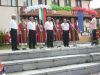
Nowadays folk songs and dances in Belitsa are performed mainly by the amateur art groups with the local community home. Their concerts are a major component in any festival of today. Attempts are being made to revive some traditions and ritual practices. Also, on the respective holidays the people of the town visit the chapels, built in sacred local areas.















All rights reserved!
Municipality of Belitsa
